Assigning Fault in Pedestrian Accidents
 An accident in which a pedestrian is struck by a moving vehicle can be extremely devastating for the involved parties. Because of the much greater weight and force of the vehicle, the pedestrian will likely suffer serious injuries and may even be killed.
Although it is commonly assumed that any vehicular accident involving a pedestrian is entirely the fault of the vehicle’s driver, that is not always the case. There are a number of things a pedestrian can do that may cause or contribute to an accident.
-
Jaywalking – If a pedestrian attempts to cross a street in the middle of a block or in another undesignated area, the driver will not be expecting them and may not see them in time to avoid a collision.
-
Ignoring Crosswalk Signs or Traffic Signals – Even if a pedestrian crosses the street in a designated area, failure to yield to yellow traffic lights or blinking crosswalk signals may place them in the path of moving vehicles.
-
Walking in Forbidden Areas – Pedestrians may ignore signs barring them from walking along certain roadways or in restricted areas. For instance, a pedestrian may be struck while walking beside an interstate highway.
Driver Fault in Pedestrian Accidents
Despite the exceptions noted above, the majority of pedestrian/auto accidents are the fault of the vehicle’s driver. Since he/she is controlling a several thousand-pound mass of metal, he has the greater responsibility to avoid collisions. Unfortunately, drivers make a number of mistakes that can easily injure an unsuspecting pedestrian.
-
Driving Under the Influence – An obvious cause of any auto accident is an impaired driver. When someone gets behind the wheel without full control of their faculties, terrible things can happen.
-
Ignoring Traffic Signals – This can occur when a driver runs a red light, turns when pedestrian traffic has the right-of-way, or otherwise ignores the direction of a traffic signal.
-
Disregarding Crosswalks – A careless driver may neglect to slow for signs and pavement markings that indicate a pedestrian crosswalk.
-
Passing a School Bus – For unexplainable reasons, a driver in a hurry may pass a stopped school bus. Ignoring the flashing red light and other indications may cause the driver to strike a child who has just left the bus.
-
Careless Driving – Even if a pedestrian is in an inappropriate location, a driver should exercise reasonable caution to avoid a collision.
 Lane sharing accidents are a common source of injury and wrongful death for motorcyclists. Lane sharing, also called “lane splitting,” “filtering forward,” or “stripe-riding,” depending on the specific circumstances, is surrounded by confusion in many people’s minds. Generally, it refers to any activity in which more than one vehicle uses the same lane adjacent to one another (as opposed to behind or in front of one another). Because motorcycles are much narrower than other vehicles, it is easy and often relatively danger-free for them to engage in lane sharing, especially between two motorcycles. But is it legal? Here is how New Mexico state law addresses this activity:
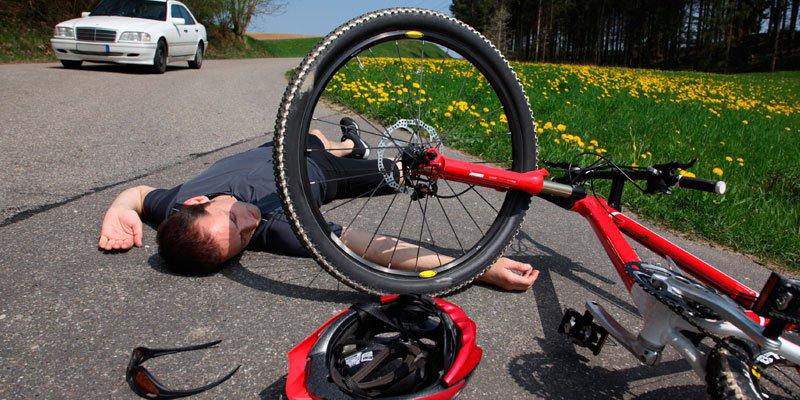 Bicycle accidents can have multiple causes: difficult terrain is among the most common, but also equipment failure, and motor vehicle interference or collision. Injuries from these accidents range from minor cuts and scrapes to traumatic brain injuries, paralysis, and even death. No matter the cause or severity of your accident, if you have been injured and need medical attention you may also be able to receive a settlement from a personal injury or product liability lawsuit.